 28 Jan, 2026 - Thrive!

Back to school: Ergonomics for our kids

Back to school: Ergonomics for our kids

Ergonomics is defined as "an applied science concerned with designing and arranging things people use so that the people and things interact most efficiently and safely."
Simply put, ergonomics is about setting things up so your body doesn't have to work harder than it should.
Why posture habits start early and last a lifetime
Children are increasingly experiencing back, neck, and postural issues due to heavy schoolbags, long periods of sitting, poor desk set-ups, and increased screen time. As the school year begins, many children's backs go back into desks, chairs, and classrooms, often after a holiday filled with movement and play.
But back health is more than a childhood concern. The habits formed at school often carry through to university and into the workplace. By encouraging healthy posture and movement early on, parents and caregivers can help protect not only their children's developing spines but also their long-term back health.
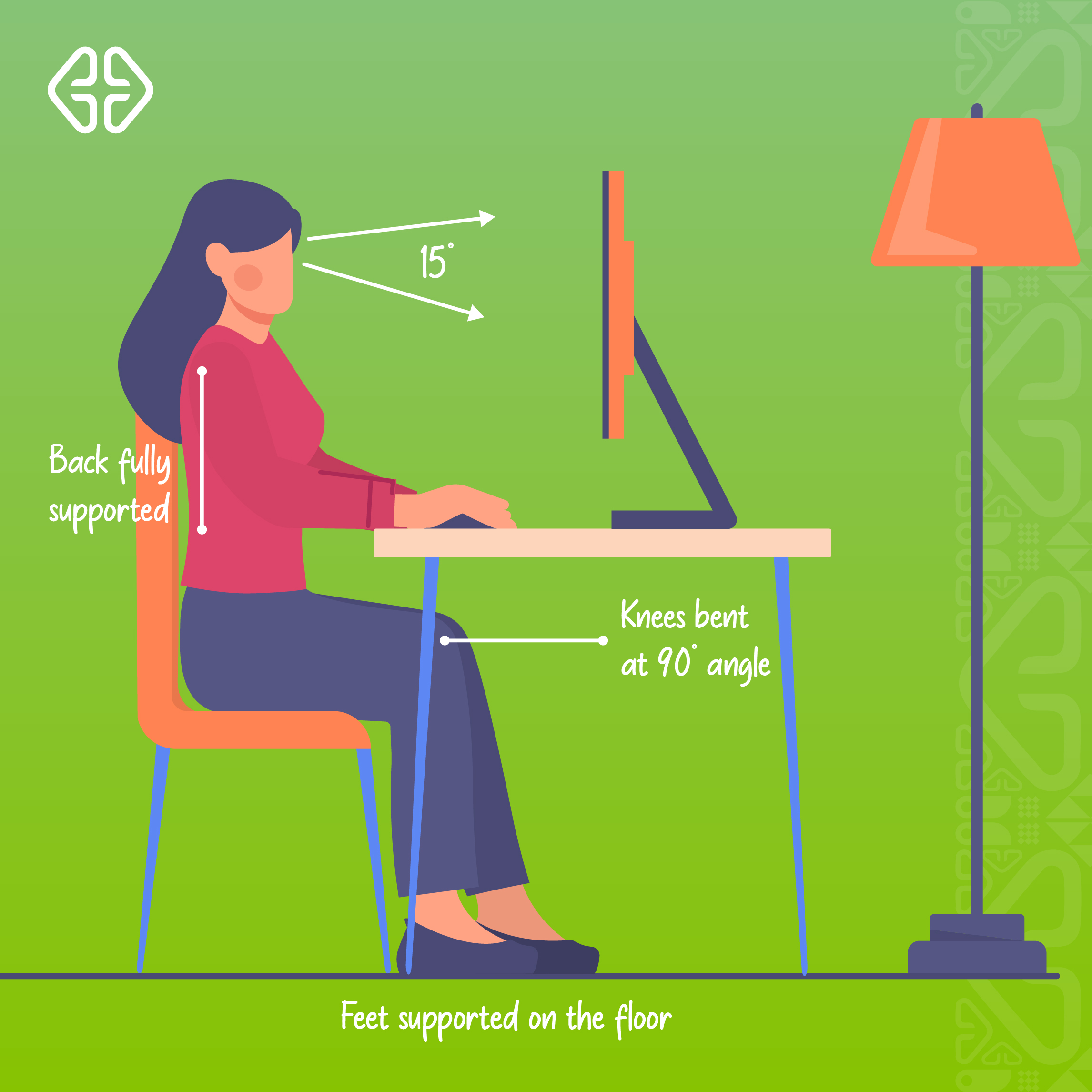
What many of us don't know is that sitting "puts a lot of strain on the lower back – it causes a 50% higher compression on the lower back discs than standing does," writes the author of The Good Back Book, Renita Fehrsen-Du Toit. This is the reason why sitting correctly at the office, at school, and at home is so important. Your back should be fully supported, with your feet flat on the floor and your knees bent at a 90° angle.
Physiotherapist Adrian Stevens, owner of My Physios, explains that prolonged sitting is increasingly being referred to as "the new smoking".
"This is because humans respond to stress in the same way as any mammal. Our reflexes allow us to protect our abdominal contents from a predator, and our hip flexors (the psoas muscles) tighten up to protect us. But when we're sitting, the origin and insertion of the psoas muscles are close together, which the body tends to read as heightened stress."
This applies to adults and children alike. Even sitting with good posture for too long can become problematic, which is why regular movement is essential at any age.
"We're designed to move. We're not designed to sit still. To kick off a healthy pattern that small kids of six or seven can take into adulthood with them, we need to encourage them to get up and move at least every 30 minutes."
Big school begins
Returning to school after a physically active holiday, or starting big school for the first time, can be a major adjustment for young bodies. Studies have shown that the running gait of new grade 1s changes significantly after just one term of prolonged sitting.
Parents should, therefore, not shy away from speaking to teachers about correcting an ergonomic set-up that seems off or asking how the school accommodates kids with low muscle tone. In some cases, alternatives such as occasionally using a yoga ball for sitting can help develop core strength.
"Kids need to sit with their feet flat on the floor. Blocks of wood or sections of old phone books can be used to adjust chairs and tables so that ankles, hips, and knees are at 90° angles. Shorter kids can try sitting on a cushion for elevation," says Stevens.
A helpful visual cue for children is to imagine a cord gently pulling them upright from the top of their head.
Avoiding neck and eye strain
Neck tension is closely linked to eye strain. If you place your hand on the muscles at the top of your neck and move your eyes up and down, you can feel those muscles activate, showing how easily the neck holds tension. Stevens suggests some simple exercises to relieve this tension:
- Slowly nod the head "yes" 10 times while looking at an object like a tree in the distance
- Gently shake the head "no" 10 times while looking at something close by on your desk
These exercises are equally beneficial for children in the classroom and adults working at desks or on screens throughout the day. "This anterior flexion of the neck also increases the flow of cerebrospinal fluid, which takes away by-products and brings fresh oxygen and nutrients to the brain. It's excellent for thinking and focus, too."
Lighter school bags, better homework nooks
School bags are often slung over one shoulder with kids carrying loads much too heavy for their frames. But, reveals Stevens, the research tells us that kids should not carry more than 10 to 15% of their body weight. For a 30 kg child, a 5 kg bag is already too heavy.
"Ideally, scholars should only bring what they need for the current day. And when shopping for a backpack, aim for one that rests on both shoulders and has a tie across the front to balance the load. Otherwise, pack the bag with the heaviest stuff closest to the body and with the weight equally distributed across the bag to avoid strain on one side of the back or neck."
And parents should make sure their child's bodies are taken care of when they get home, too. We sometimes forget that kids spend their whole school careers doing homework at the dining room table, for example, where the chairs may be too high or the table too low.
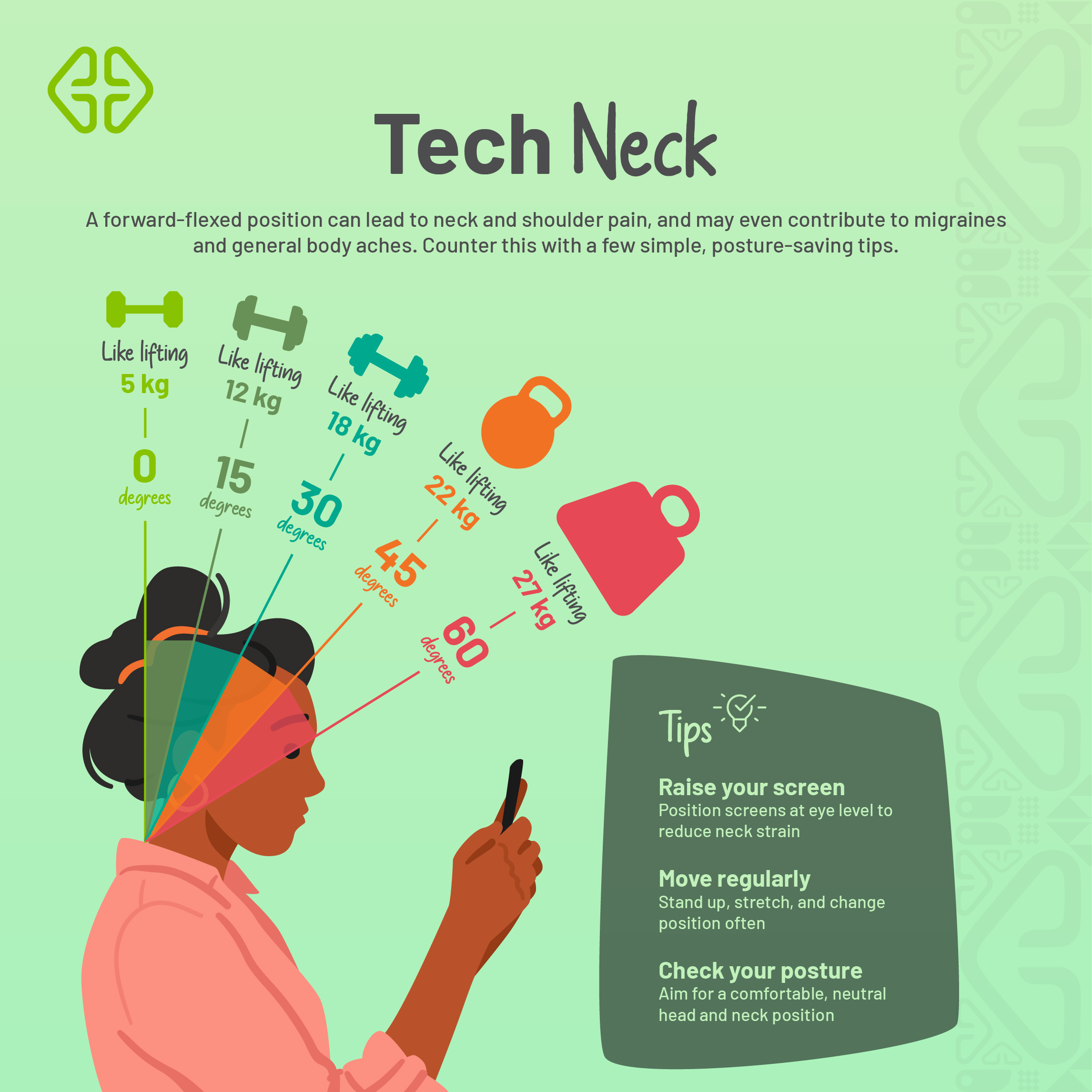
"Aim to mimic that same feet flat, 90°, 90°, 90° set-up, and help them avoid what is called ‘tech neck' – a forward-tilted head posture caused by looking down at small screens that puts excess strain on neck muscles. Screen time is best enjoyed on a flat-screen TV fixed on the wall, rather than on a small device that you must look down at," he adds.
Stevens urges that if you have any concerns about your child's posture, you should address it as soon as possible. Treating serious spine conditions in pre-adolescent children, before growth plates fuse, is much easier than later on in adulthood.
Healthy back habits start young, and they benefit the whole family. By creating supportive environments and encouraging regular movement, parents can help protect their children's developing spines while also improving their own back health.
Quick tips for parents and caregivers
Follow the 20-20 rule for eyes
- Every 20 minutes, look up into the distance for 20 seconds and then back at something close by. This helps both children and adults avoid eye strain and related problems such as tension headaches.
Kids don't fidget because they're naughty
- When kids fidget, they increase muscle activation in their bodies, which can help them focus better. Incorporate regular movement, such as the yes/no neck movements mentioned above, stretching up tall, and other mini exercises, to improve comfort and concentration.
Written for Medihelp by Vanessa Rogers.


