 18 Mar, 2026 - Thrive!

From volley to vibora: How to prep for a smashing good padel game

From volley to vibora: How to prep for a smashing good padel game

It’s the fastest-growing social sport in South Africa, with an estimated 100 000 active players and more than 600 public courts nationwide. Here’s how to thrive in the game of padel without sustaining an injury.
Common padel injuries to watch out for
We previously explored the longevity associated with racquet sports, from tennis and badminton to squash and seasonal favourite padel – particularly as we age. The stronger physique built over many years of racquet sports means greater stability and a lower risk of injury from falls.
But this does not mean that those who play padel – from beginners to professionals of all ages – are not susceptible to injuries in general. In fact, the experts at the Cape Hip and Knee Practice advise that padel-related injuries often manifest as hip-area muscle pain or soreness, with the most common cause being a hamstring strain, sprain, or small tear.
In most cases, these injuries heal on their own without surgery. But if the hamstring tendon is completely torn, they say, a surgical repair may be the best course of action – ideally within six to eight weeks of the tear to reduce the risk of complications from any ensuing scar tissue.
The hip-hamstring connection
According to the biokineticists behind Racketnow, an online retailer specialising in racquet-sports equipment, “Having strong and flexible hamstrings is crucial for optimal performance and injury prevention. Your hamstrings, the muscles located at the backs of your thighs, play a vital role in generating power, speed, and agility on the court.”
But what about when the hamstrings are tight or have been overused? Why do you feel this in the hips the next day? Apparently, this is because the hamstrings originate at the sitting bones (ischial tuberosities) of the pelvis, which are part of the hip structure. Any tension, shortening, or misalignment here directly impacts the hip joint and surrounding areas.
Role of posture and all-important glute strength
Jared Beckstrand explains on his physiotherapy-focused YouTube channel Tone and Tighten how to take to the padel courts on a regular basis without too much risk of injury. In this clip, he demonstrates how to reset the pelvis to restore optimal posture, strengthen the glutes (for example, with bridges and deadlifts), and loosen the hamstrings (for example, with a foam roller or tennis ball).
“Remember to start slowly and progress into the sport,” advises fellow physiotherapist Lee-Roy Thomas of Lee Thomas Physiotherapy in Somerset West. There are plenty of newcomers to this sport, which, as mentioned, is growing rapidly in popularity. Not being familiar with the game can increase the risk of injury, particularly to the hamstrings, if you are not both mobile and strong at the same time. An important approach to reduce the risk of hamstring injury is to strengthen not only the hamstrings but also the lower back and gluteus complex. “As Beckstrand mentions, glute bridges and stiff-leg deadlifts – together with Nordic hamstring curls – are great at reducing the risk of hamstring tears,” he adds.
|
Flexible hamstrings empower you to:
Source: Racketnow |
By incorporating these targeted hamstring exercises into your daily fitness-training routine, you will be capable of the strength, power, and resilience needed to excel in your favourite racquet sport – padel being the word on every athlete’s lips.
Court-based warm-ups
Sandy Farquharson, a founder and coach at The Padel School, reminds us of the importance of on-court warm-ups before a game. His advice is to:
- Start slowly and build up confidence in all your shots for a total of about five minutes;
- Start up at the net to get some real rhythm and feeling on the ball before you move back;
- Gradually edge your way backwards, while still volleying to one another;
- Once you reach the back of the court, don’t hit at 160 kilometres an hour. Rather, do so at a nice, controlled speed, using the back glass when necessary. Keep on your toes while remaining consistent and accurate. Note: This is an excellent way to feel out your opponent’s strengths and weaknesses ahead of a league match;
- Next up, one player should move up to the net, while the other practises defending at the back using volleys (and vice versa); and
- Keep the smashes soft to start with, and then build up the momentum until you’re hitting an aggressive top-spin slice smash.
Farquharson’s advice is to practise specific shots (such as overhead smashes) regularly during your warm-up, as this will build your confidence and skill in those shots during the game. An effective warm-up, he believes, allows you to start that first point raring to go – great for both body and mind.
After the match, a light jog or walk around the court will bring your heart rate down (perhaps as you collect balls). Follow this with a few static stretches and/or foam-rolling exercises as recommended by your coach or your fitness professional.
The exercises
|
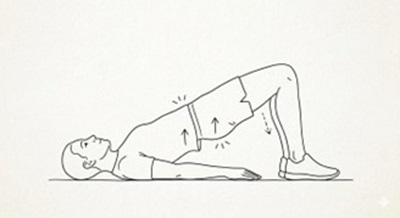
1. Glute bridge |
Lie on your back with knees shoulder-width apart, feet flat on the ground, and knees bent. Slowly raise your hips, engage your glutes, and squeeze your abs. At the top of the bridge, hold for a few seconds, then lower back to the ground, releasing all tension in the abs and glutes.
|
|
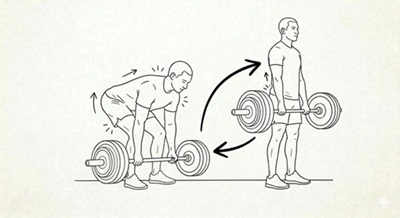
2. Stiff-leg deadlift |
Stand over a loaded barbell with feet shoulder-width apart. Hinge at the hips, push your butt back, and grip the bar with an overhand grip. Keep only a slight bend in the knees – straighter than a conventional deadlift, but never locked out. Squeeze your shoulder blades together, brace your core, and drive through your heels to stand tall, finishing by pushing your hips forward and squeezing your glutes at the top. To lower, hinge back at the hips and descend with control, keeping the bar close to your legs, until you feel a deep stretch in your hamstrings.
|
|
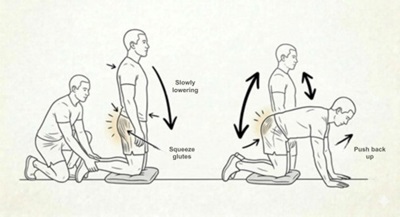
3. Nordic hamstring curl |
Have your training partner hold your ankles down as you kneel on a small mat or cushion. Attempt to keep a straight line between your knees, hips, and shoulders as you slowly lower to the floor in front of you. Then catch yourself with your hands and push back up to the starting position. Be sure to squeeze your glutes to help maintain the alignment of your hips and trunk.
|
By building your strength and with the right preparation and warm-up routine, you can enjoy everything padel has to offer while reducing your risk of injury. A little care before and after each game can go a long way in keeping you active on the court for years to come.
Written for Medihelp by Vanessa Rogers, with editorial refinements from Medihelp.


